Detailed specification of the electrolyte-supported cell (ESC), including materials, cell configuration, and representative performance metrics measured under standardized test conditions.
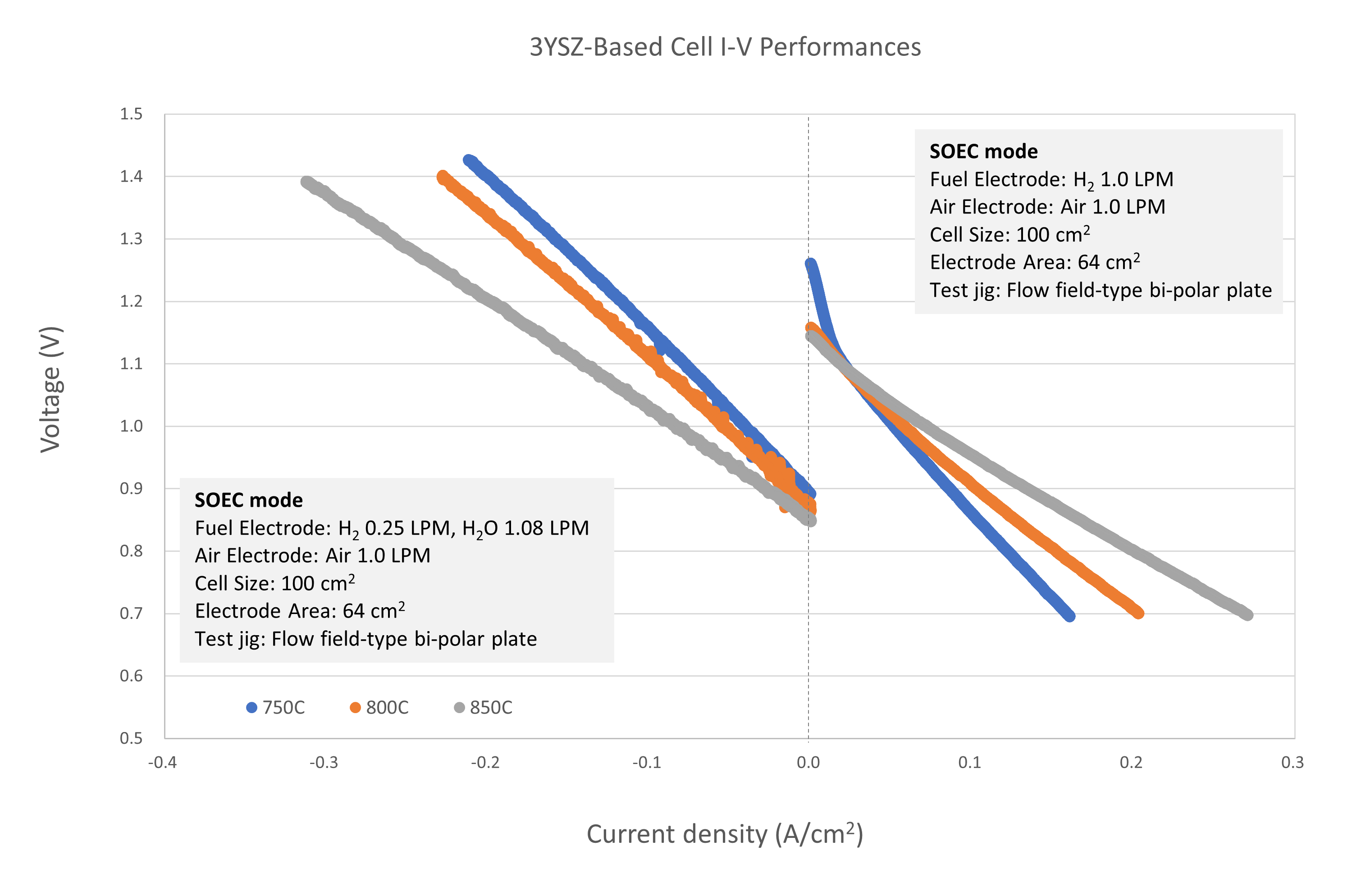
I–V characteristics of the electrolyte-supported cell (ESC) under SOFC and SOEC operation, highlighting temperature-dependent performance and electrochemical behavior.
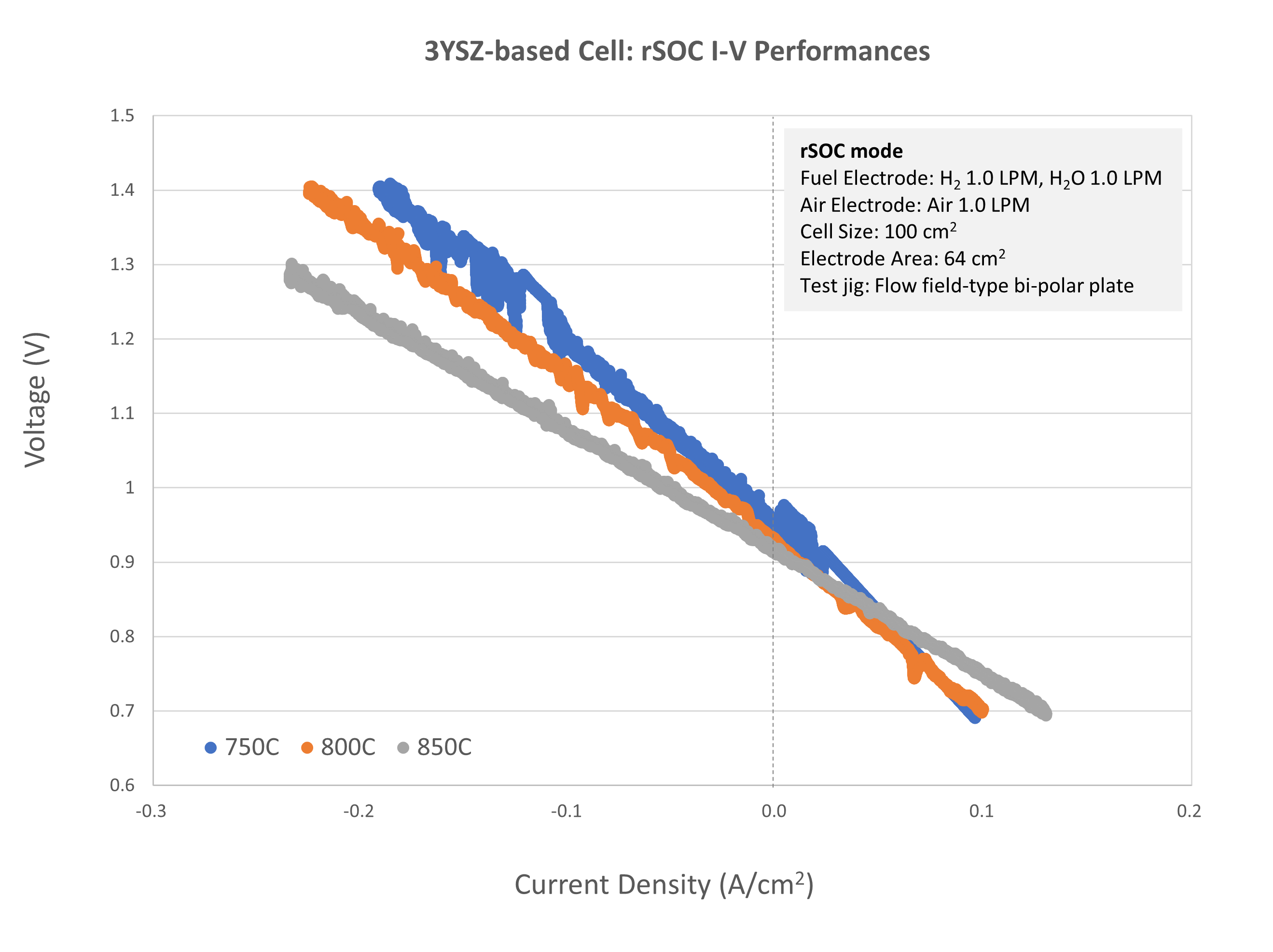
Reversible I–V behavior of the cell under rSOC operation, highlighting its capability for both SOFC and SOEC modes with temperature-dependent performance.
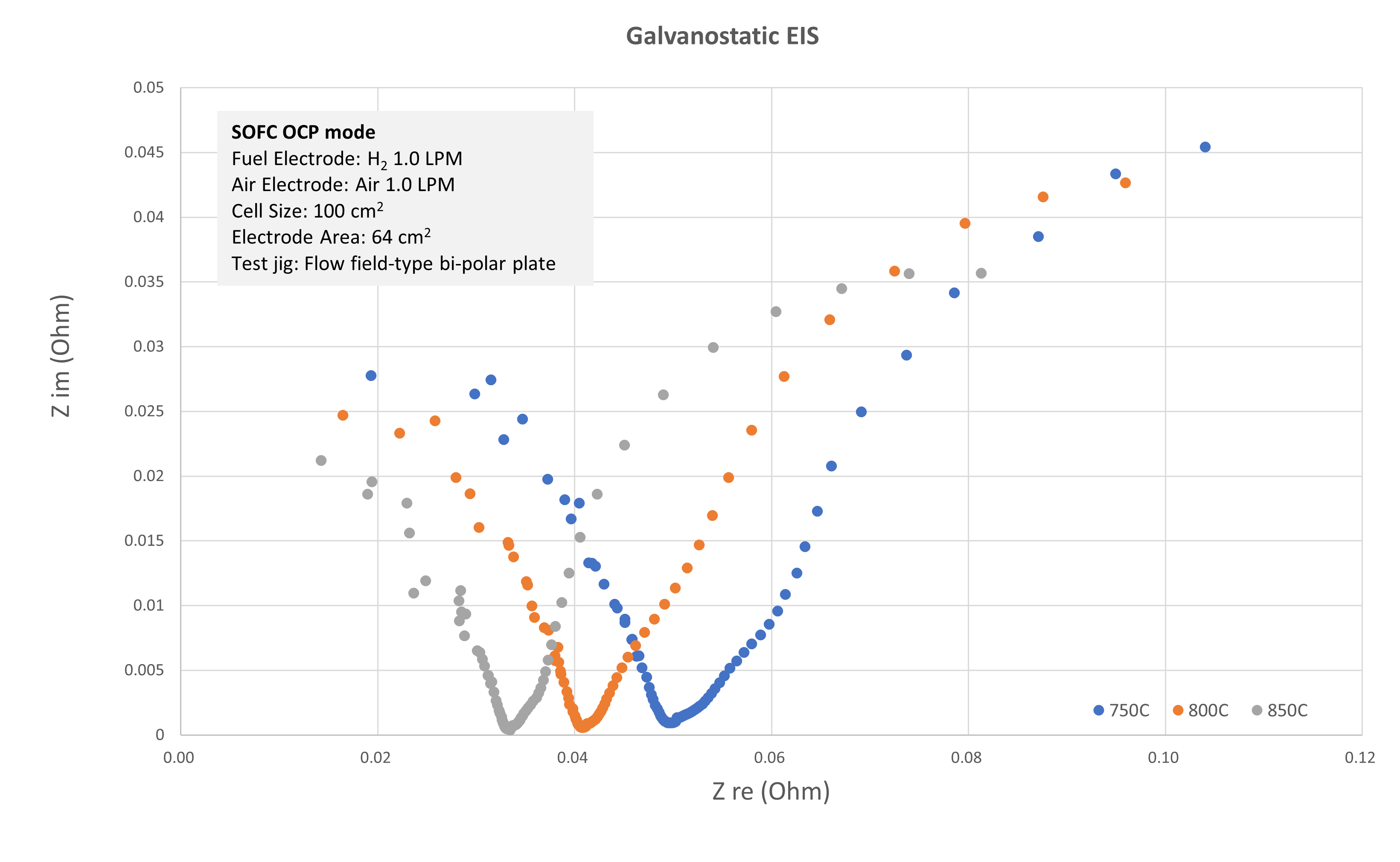
Galvanostatic EIS analysis of the cell, enabling separation of ohmic and polarization resistances and evaluation of temperature-dependent electrochemical behavior.
SEM cross-section illustrating the well-defined multi-layer architecture, with a dense YSZ electrolyte and porous Ni-based fuel and LSCF air electrodes.
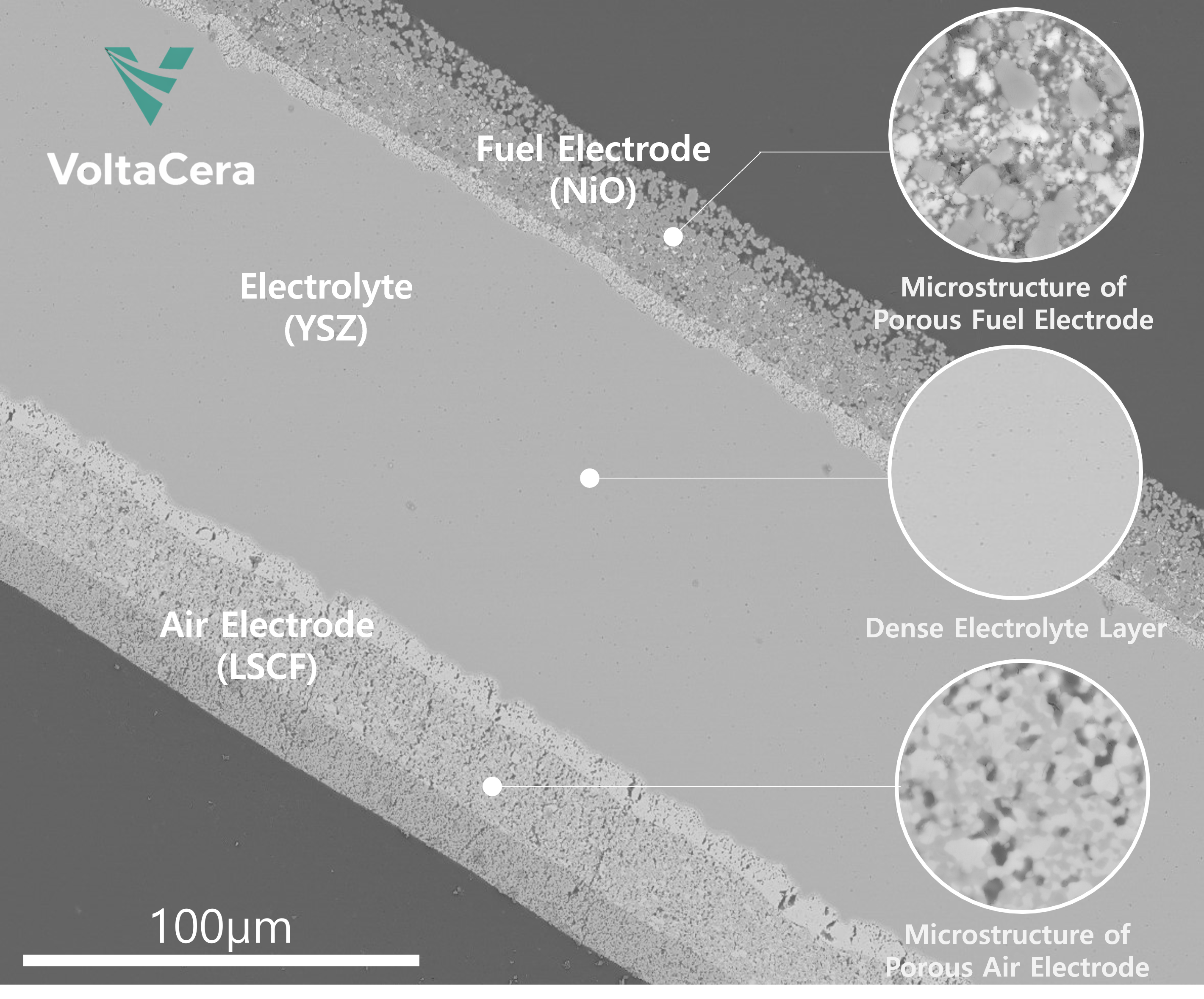
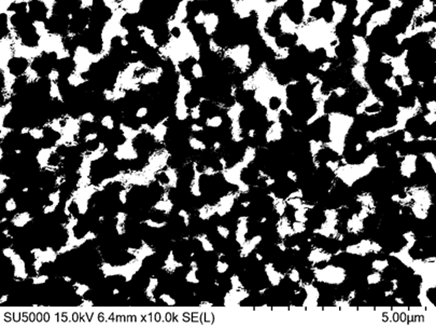
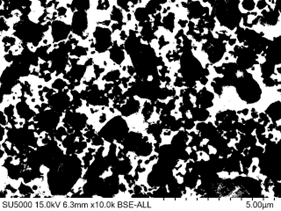
SEM images used for evaluating pore morphology, distribution, and connectivity in both air and fuel electrodes, providing insight into gas diffusion pathways and reaction sites.